by Raj Melville, Mech E, H2
Antarctica, the Seventh Continent, that remote land at the end of the world has always held a fascinating attraction. As I prepared for retirement, it was on the top of my bucket list to visit. Together with my wife and another couple we began planning a trip about a year ago. Researching options, we found that while really remote, Antarctica has become fairly accessible over the years. Most folks wishing to visit can do so on the many different cruises that typically leave from South America to cross the Drake Passage and then touch Antarctica.
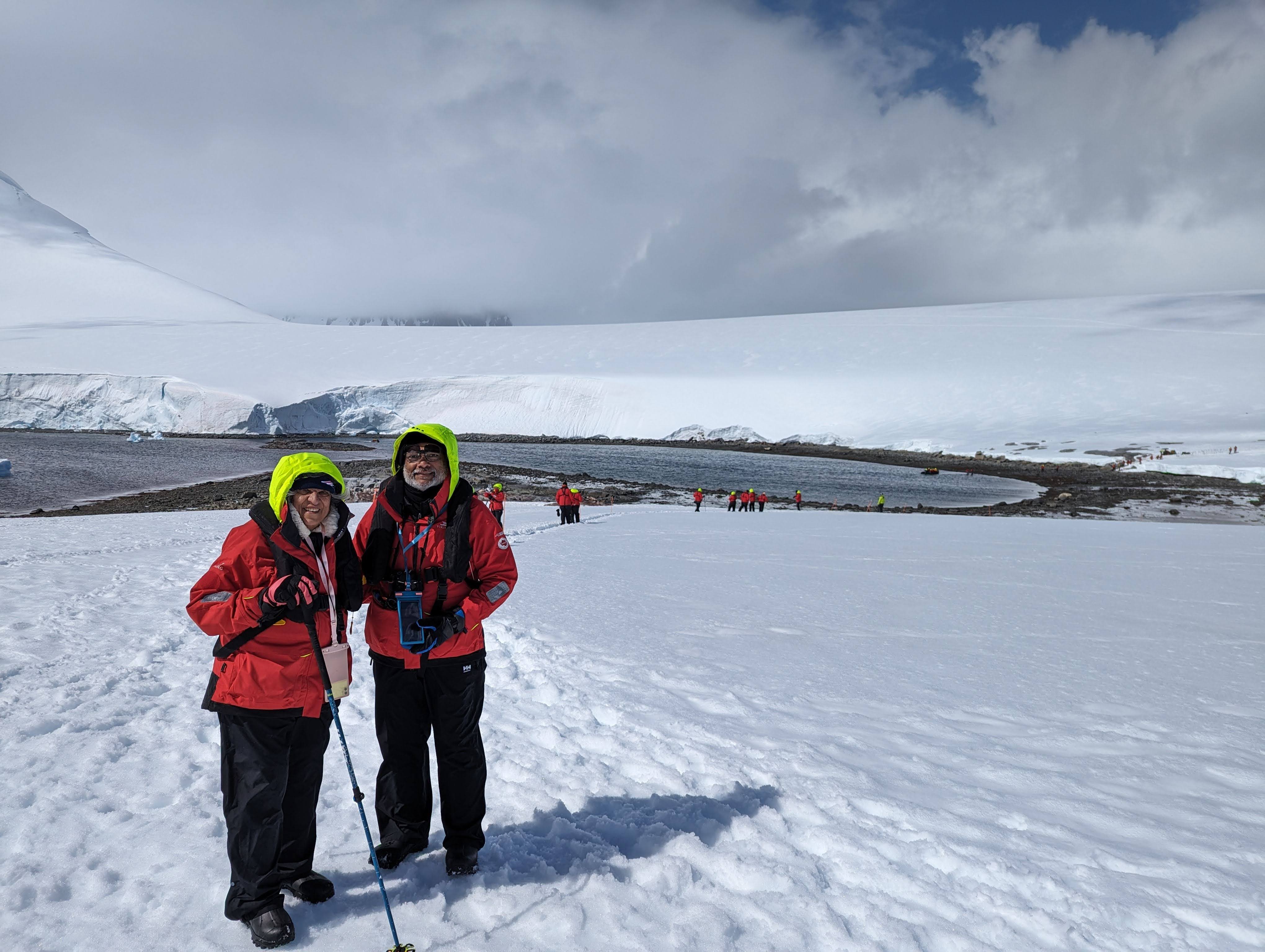
We booked ourselves on a cruise ship leaving Ushuaia, which bills itself as the southernmost city in the world. The cruise would take a day and a half to cross the infamous Drake Passage, notorious for nasty weather before we reached Antarctica and then a week touching land at a number of different sites.
The time leading up to our departure in January, was filled with eager anticipation and planning, figuring out what to wear and pack for the trip. Fortunately, January in the Southern hemisphere is summer, and temperatures were not expected to be very extreme (30 – 45F, -1 to 7C). Having lived in the Boston area since graduating from IIT, we were used to cold winters. Still, we followed recommendations and prepared with three layers of clothing, a quick drying inner layer, a warm insulated middle layer, and a windproof, waterproof outer layer. The ship provided us with the outer layers of waterproof pants, a double lined jacket, and thick waterproof boots. Double layered gloves, a woollen hat and a neck gaiter completed the outfit. Despite the cold weather, the icy white surfaces and the constant sun increase the risk of sun exposure. Dark glasses and sunscreen are highly recommended.
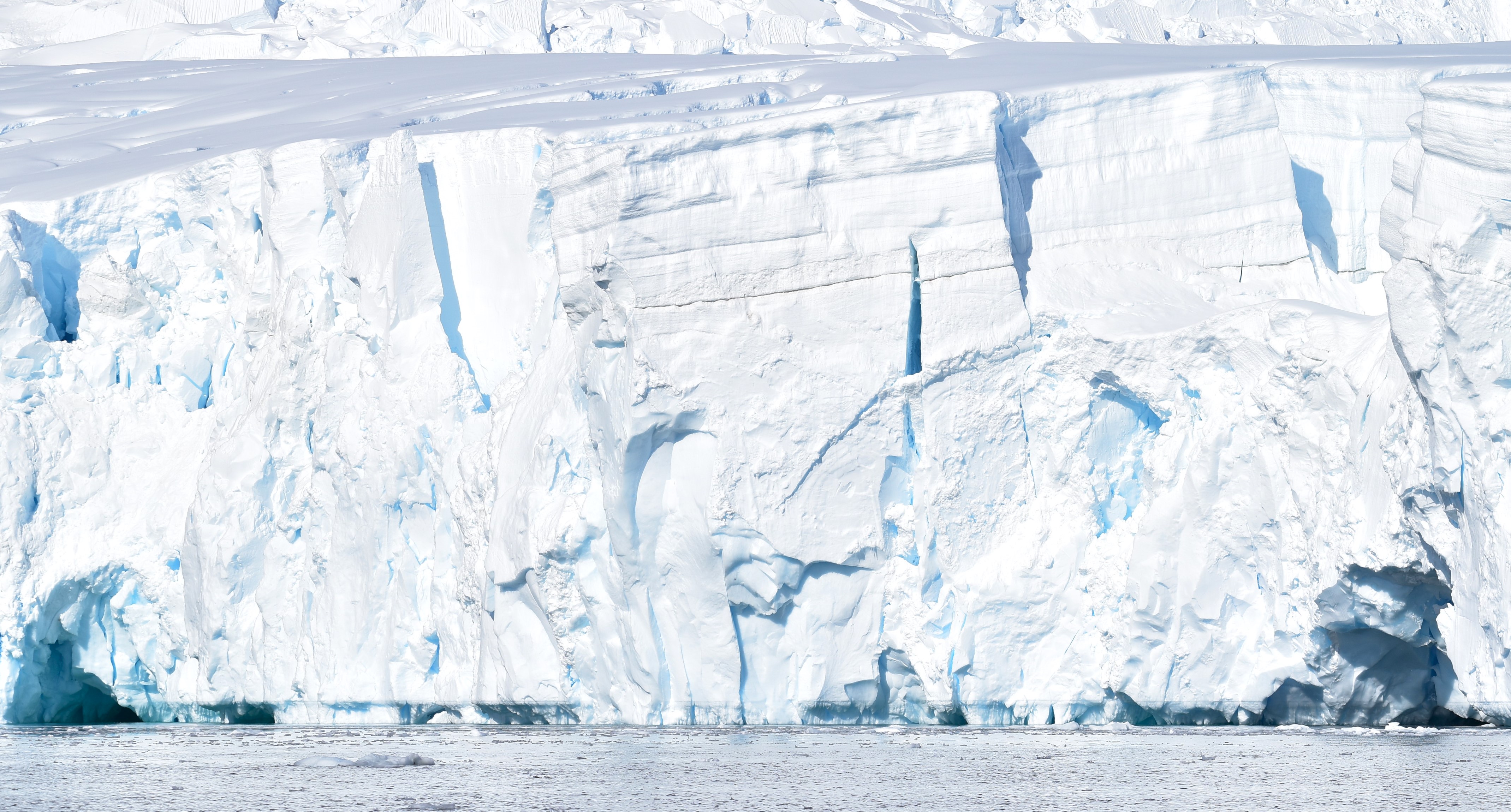
After a week touring Argentina, we finally flew down to Ushuaia and boarded our ship, the Viking Polaris. The transit across the Drake was a bit choppy but uneventful and we finally arrived in Antarctica. Despite all you read or see, nothing prepares you for the actual sight. No photo can capture the sheer size of the frozen continent nor the innumerable icy hues.
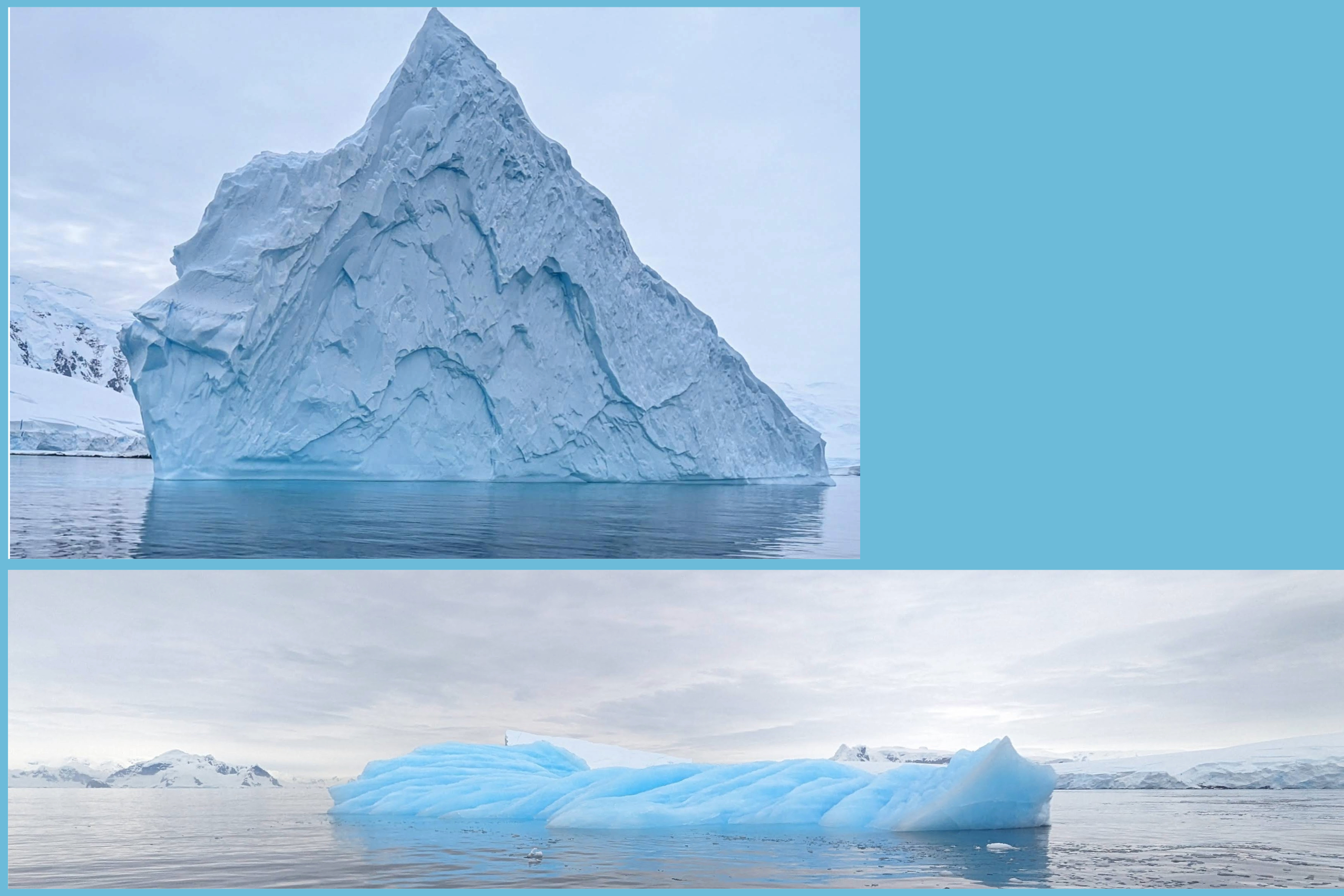
Standing on the ship as we approached land, there was nothing visible on land than ice; mountains of it. With no trees or other objects, you lose a sense of size and perspective. The couple of photos provide some sense of the scale, the dark ‘caves’ at the bottom are around 40 to 50 feet high. That ice pack is around 1000 feet high and has been accumulating over hundreds of years.
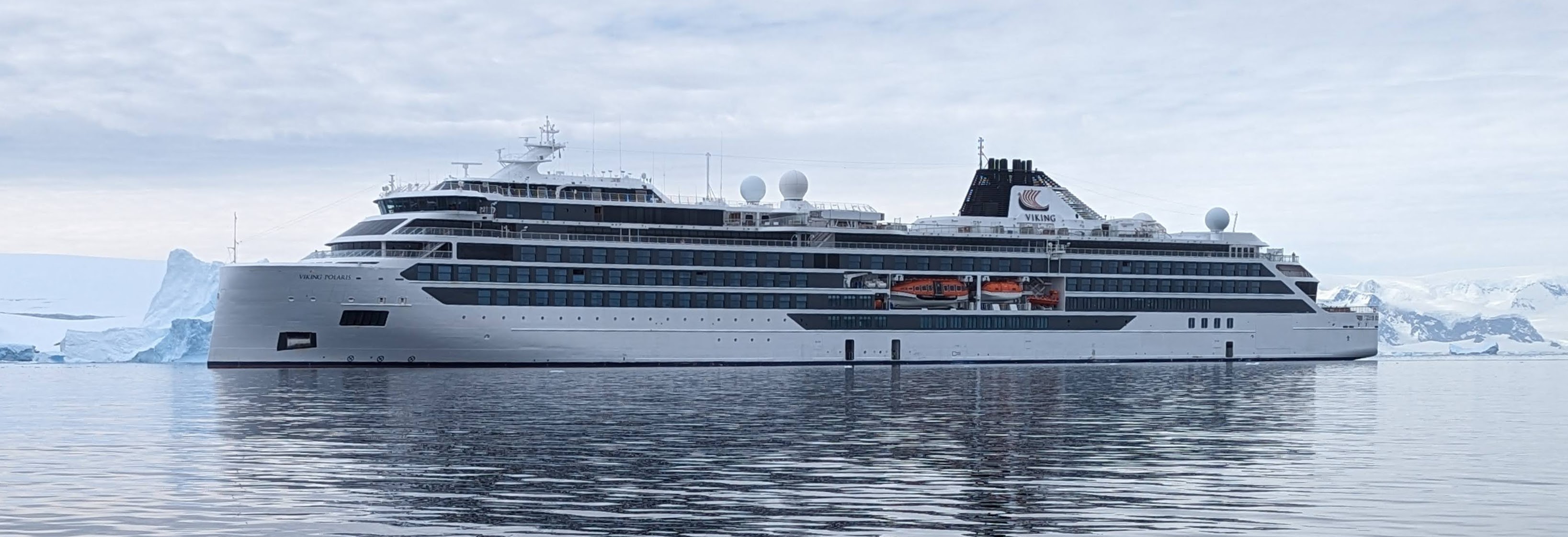
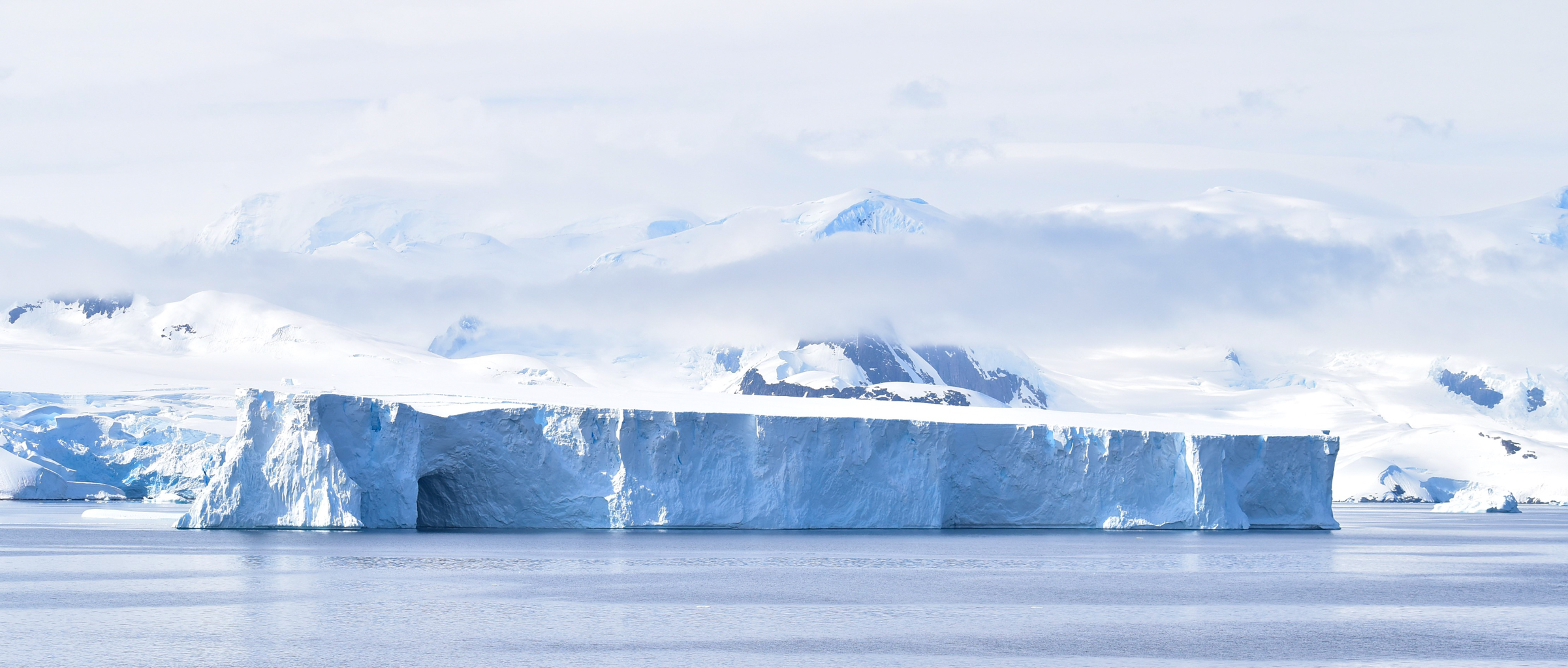
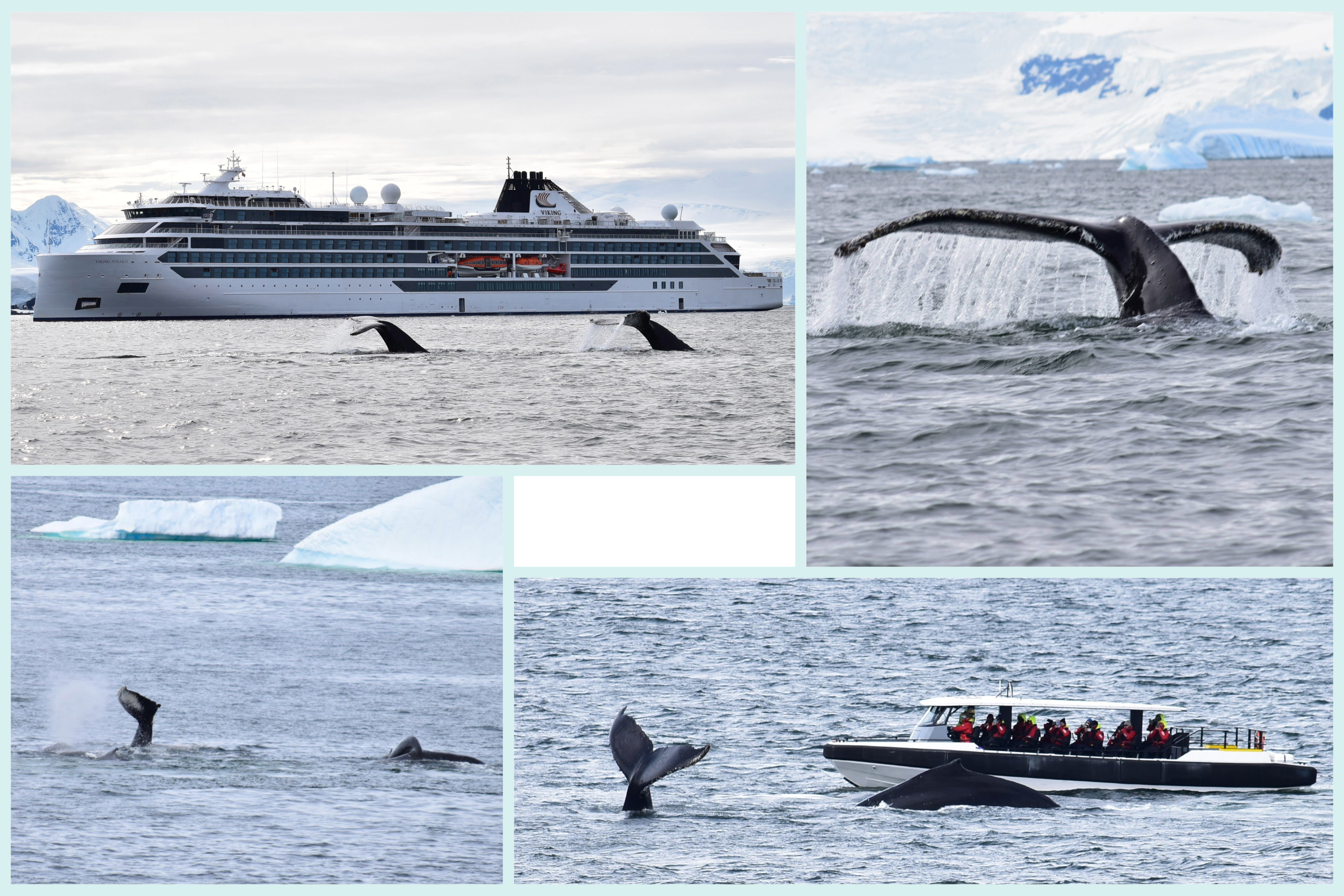
Visiting Antarctica, one realizes the sheer size and extent of the ice fields and what their loss will mean to humans. Another couple of photos show the enormous size of the icesheets that are being calved off the mainland. The first photo is our ship; it is around 600 feet long. The next photo is an iceberg that passed us one day; it was as long as our ship and almost as high (which means it was about 8 times deeper – possibly 800 feet down).
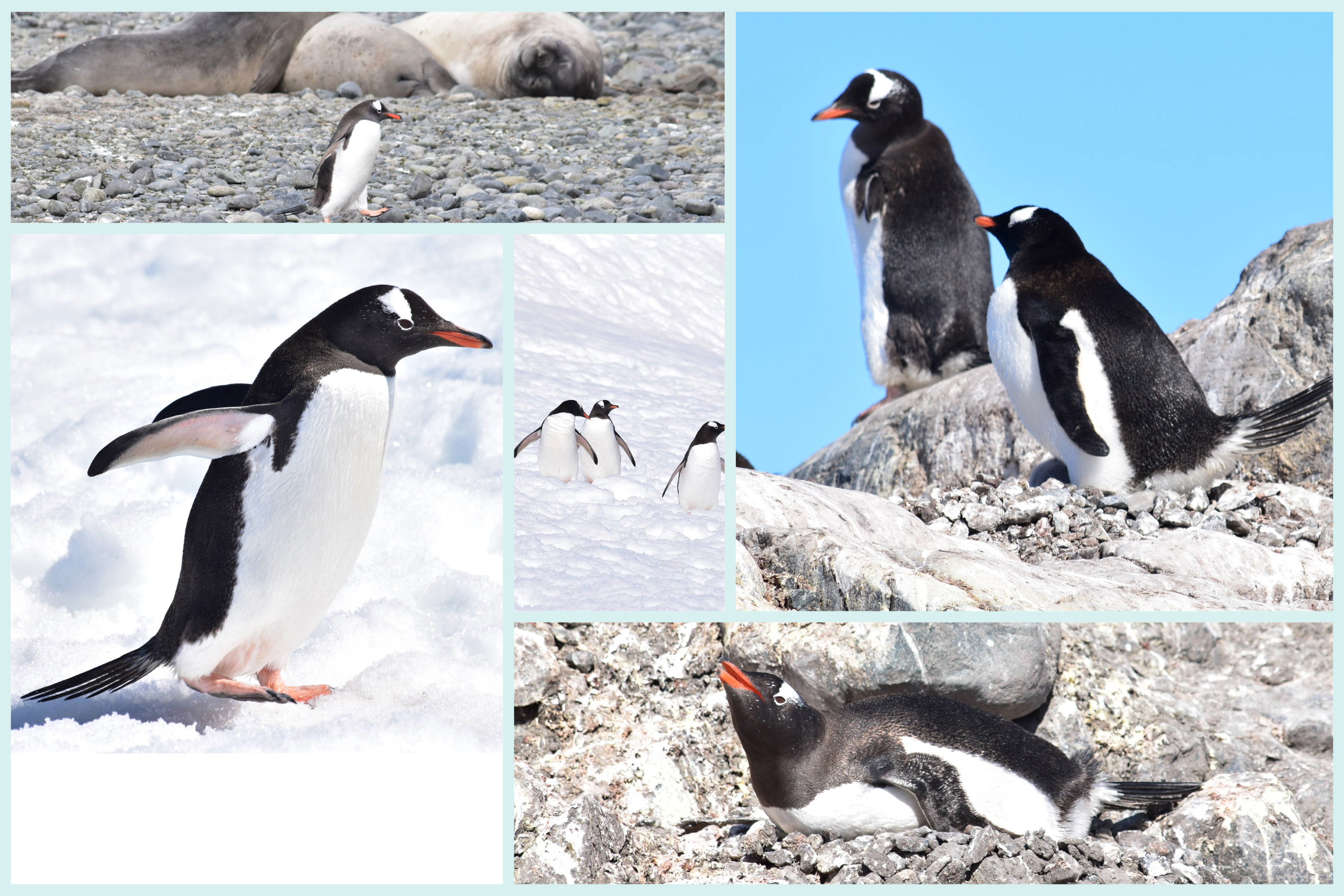
Antarctica and penguins are synonymous, and we had opportunities to see many of them in colonies all along the coast. Not having been exposed to humans much, they would wander right up to us. We were told to keep 15 feet away from all wild animals to avoid any cross contamination, but no one told the penguins that! The popular species we saw were the Gentoo and the Chinstrap penguin.
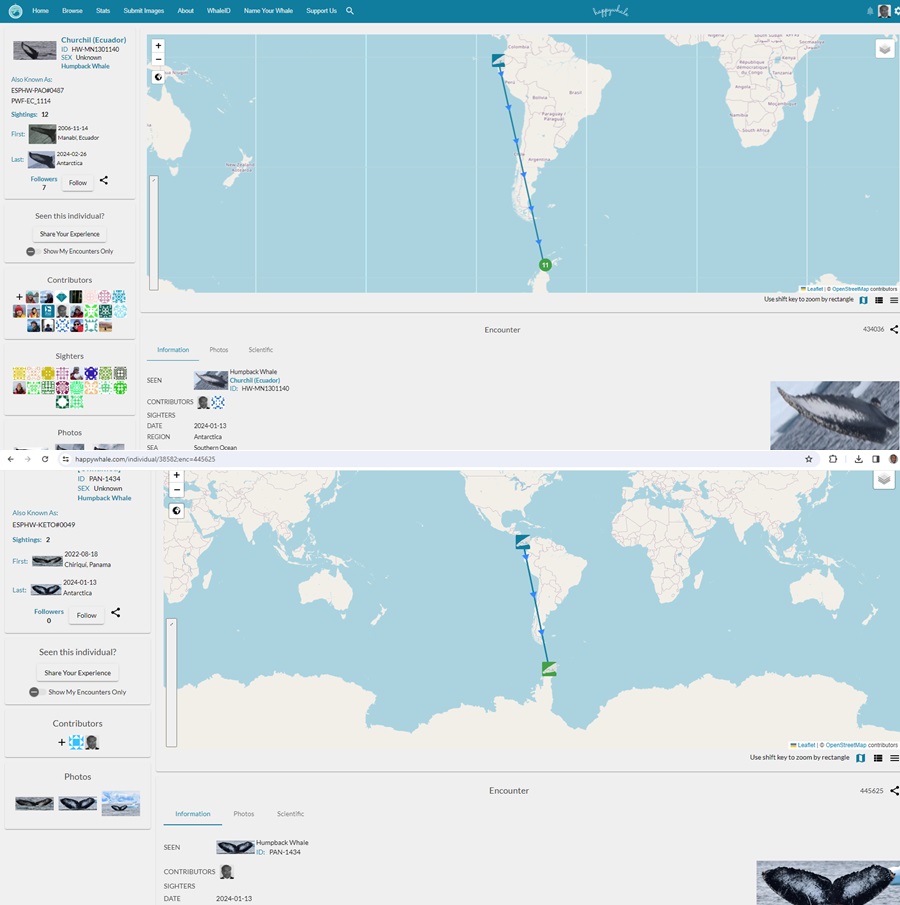
The Antarctic waters are also the home of migrating whales, and we were fortunate to find a huge pod of maybe 50 -60 whales feeding on the krill at one of our landing sites. As we rode in one of the smaller boats, the whales were feeding and breaching all around us. Our ship also hosted a scientific crew who taught us how to upload our whale photos to a citizen science site, HappyWhale.com, where they are identified by their unique markings using AI and tracked worldwide. A couple of the whales I photographed had travelled quite extensively, one all the way from Panama and the other off the coast of Peru.
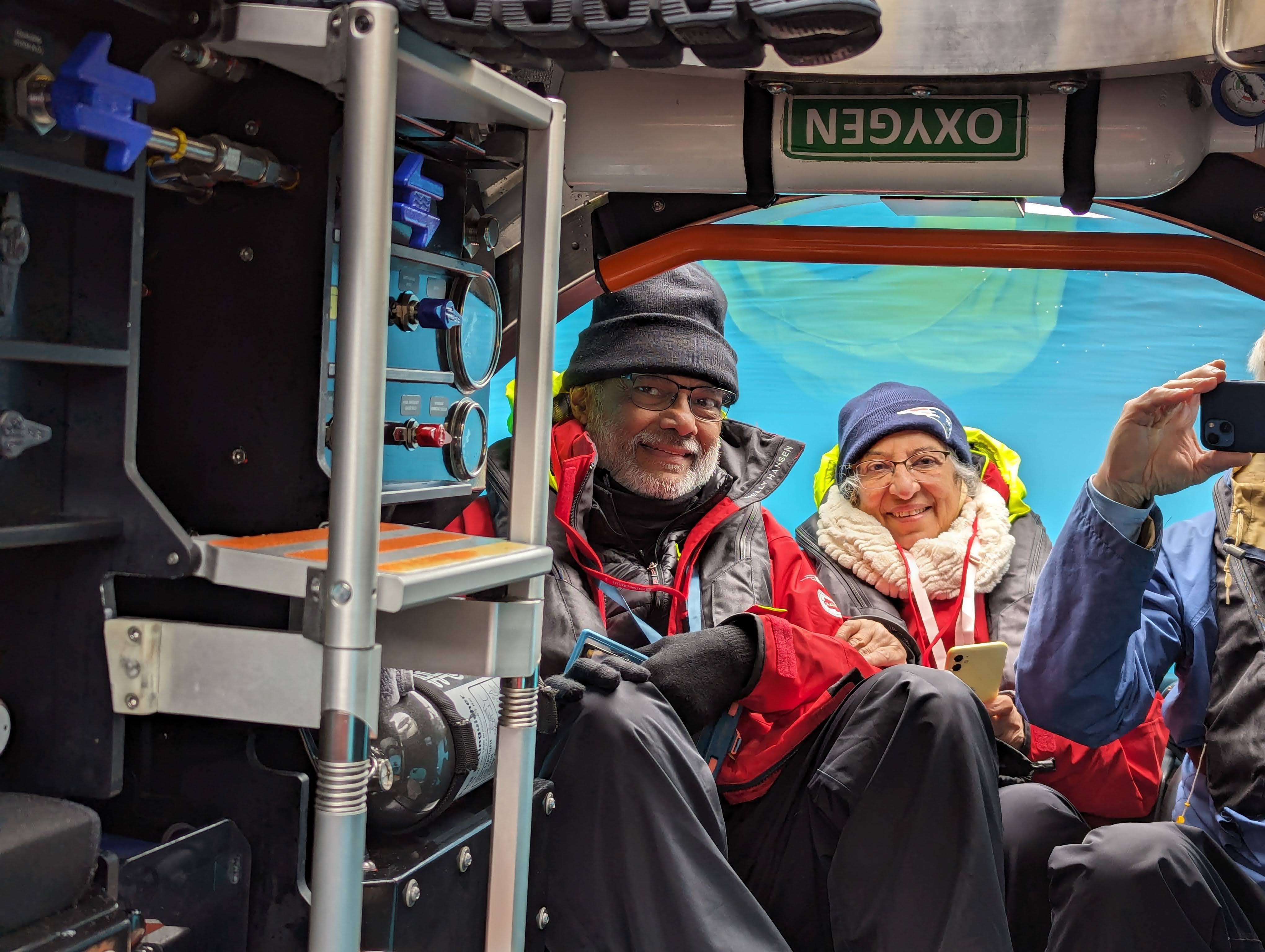
Our ship was one of the few that also had a submersible, a small submarine, and we took the opportunity to take a ride down in it to around 400 feet underwater. That was a once in a lifetime experience and really thrilling to see the life thriving on the ocean under frigid conditions.
All in all, this was a truly memorable experience and one that is a definite bucket list item. Returning from the trip, one has a profound appreciation for how insignificant humanity is when confronted with nature. Yet we have the capability of destroying thousands of years of nature’s work in the matter of decades if we don’t do something soon. Viewing the enormous frozen vistas, one realizes the extreme impact that any change in the Antarctic will have on humanity.
This article also appeared in the “Chai Aur Samose Per Charche” section of the April 2024 DEAN ACR Newsletter.
 IIT Bombay 1974 Reunion