की राजहंसाचे चालणे । जगी जालिया शहाणे॥ म्हणोनि काय कवणे। चालोचि नये॥ – पु.ल. देशपांडे (or may be some ancient verse quoted by पु.ल.)
I showed up for my IIT interview in June 1969. It was my first trip to Mumbai – then Bombay – and my astonishment seemed to have no bounds. Wide roads, local trains that ran on time at high speed, buses with separate doors for passengers to enter and exit, and so on.
I was all of 80 pounds but the weight limit for entry into IIT was 88 pounds (40 kg). So, I ate several bananas during the days leading to as well as the morning of the IIT medical. During the medical I weighed 84 pounds, but the person who checked my weight took pity on me and entered my weight as 90 pounds. First obstacle cleared!
And there were many obstacles in my way – most important being the language barrier. I was good at written English but had absolutely no experience with spoken English. You can imagine the inferiority complex that goes with it. But with support from friends and hard work, I was able to make it through all five years at IIT. I did not attend the commencement ceremony in 1974 for some reason, and it remains one of my biggest regrets.
I did join the M. Tech. program in the Chemical Engineering department at IIT, but within a week I got an opportunity to join the 19th Batch at the BARC training school. The Pokharan Nuclear explosion was in the news in those days, and it prompted me to select Atomic Energy as a career. After completing a grueling one year training curriculum consisting of 16 Nuclear engineering related courses, I joined BARC as a Class 1 Scientific Officer with the Government of India. When my friend Manohar Parrikar asked me if I knew any class 1 officer who could be a character witness for him as he was entering employment in Premier Automobiles, I was proud to vouch for him.
Those were the days when the computer revolution was just taking off. My department at BARC bought and installed a new Intel 4004 computer – predecessor of Intel 8080. My friend was programming it in machine language by flipping a bank of switches. I helped him and enjoying it, and soon I became an expert. I asked for a transfer to that department but was told that that was a job of computer scientists and since I was a chemical engineer, I could not get that job. Irritated, I left BARC and did a masters in Computer Science in Rochester NY, and ended up staying there for the next 40 plus years.
After going through a couple of small companies to get my green card, I joined Eastman Kodak Company in 1985. Kodak, along with Disney and Coca Cola, was one of the most recognizable consumer brands in the world. But with the digital revolution around the corner, the handwriting was on the wall. My friend Vishwas Gokhale (Chem E 1976, H8), who was working for Kodak in those days, cautioned me against joining Kodak, saying ‘Kodak is a bleeding elephant, will succumb to its wounds soon’. Succumb it did, but the bleeding went on for more than a few decades, long enough for me to make my career at Kodak.
After several stints at various departments in Kodak – mostly in software development and project management – I ended up in China with an assignment to source camera, picture frames and other devices for Kodak’s newly formed Digital Capture and Devices business unit. We sold more than 100 million digital cameras per year. But with the iPhone 3 camera being superior to Kodak’s megapixel camera, the business evaporated, and our unit was shut down almost overnight. After getting out of the camera business, our Business Unit pursued various other consumer businesses but ended up giving up that pursuit since management was not willing to shell out the working capital needed for not-yet-established electronic consumer devices. After a short stint with the online photo business, I retired from Kodak in 2017 after 35 years. But 64 is too young to retire these days, so, since 2017 I have been working in a leadership position at a small Dallas-based company specializing in Healthcare Communication.
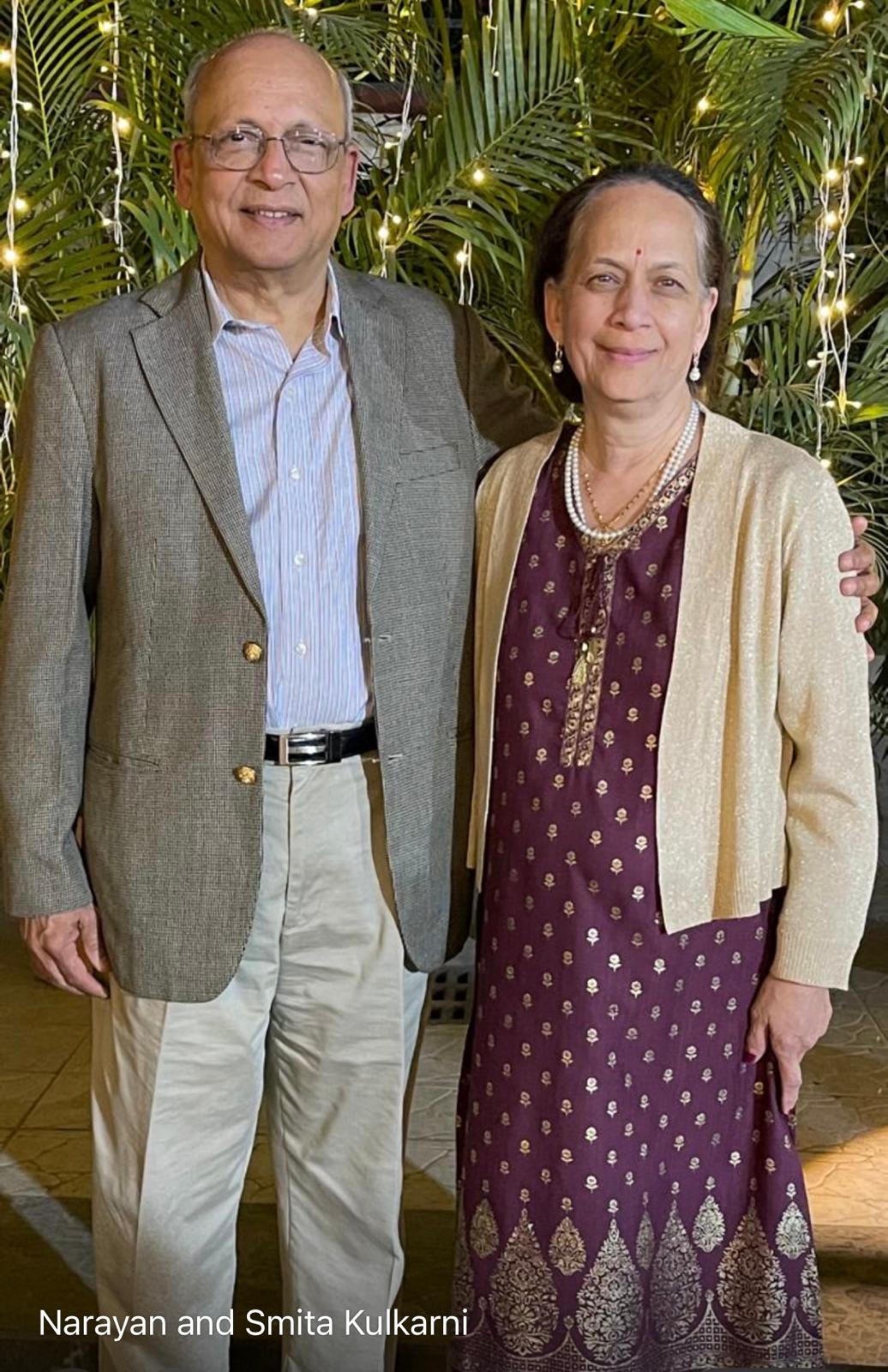
I married Smita Ozarkar from Mulund in 1979. We live in Ashburn, VA. We renovated our old 1 BHK flat in Mulund and established a residence in Mumbai in 2019. Since then, we have been spending several months in a year living in Mumbai and working from there. Our daughters, Swati and Suchitra, are both married and settled in their lives. Swati, with her husband and two kids, lives in Aldie, VA, a suburb of Washington DC (~10 min from our house). Suchita, with her husband and one year old daughter, lives in Boston.
When I look back at my life, I have to say I led an ordinary life, unremarkable in every respect. My life got a tremendous boost from the foundation of IIT education, for which I will be eternally grateful. But I feel I did not put that foundation to good use. I was right there at the forefront of the information technology revolution – computers, Internet, Cellphones, and now AI – but ended up being a more of a follower than a leader most of my life. But I have no complaints or regrets. I lived a good life. I have been a good ‘citizen’ – good husband, good father, good friend, and above all, a good person. I came a long way from the hard life my parents – like almost everyone’s parent, I suppose – lived. I am happy with what I have achieved, and proud to be friends with many in this group who reached for the moon and grabbed it. Let’s stay connected!
 IIT Bombay 1974 Reunion